Motivated by a friend, we’ll share bits of our experience during the Olympic Games Rio 2016. Before starting, I would like to clarify that Globo.com only had rights for streaming the content to Brazil.
We used around 5.5 TB of memory with 1056 CPU’s across two PoP’s located on the southeast of the country.
Audience during the game BRA x SWE.
Not so long; I’ll read it
The live streaming infrastructure for the Olympics was an enhancement iteration over the previous architecture for FIFA 2014 World Cup.
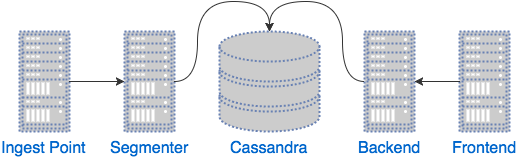
The ingest point receives an RTMP input using nginx-rtmp and then forwards the RTMP to the segmenter. This extra layer provides mostly scheduling, resource sharing and security.
The segmenter uses EvoStream to generate HLS in a known folder watched by a python daemon and then this daemon sends video data and metadata to a cassandra cluster, which is used mostly as a queue.
Now let’s move to the user point of view. When the player wants to play a video, it needs to get a video chunk, requesting a file from our front-end, which provides caching, security, load balancing using nginx.
Network tip:
Modern network cards offers multiple-queues: pin each queue, XPS, RPS to a specific cpu.
When this front-end does not have the requested chunk it goes to the backend which uses nginx with lua to generate the playlist and serve the video chunks from cassandra.
Caching tip:
Use RAM to cache: a dual layer caching solution, caching the hot content (most current) on tmpFSand the colder content (older) on disk might decrease the CPU load, disk IOPS and response time.
You can find a more detailed view about the nginx usage at a two part article posted at nginx.com: caching and micro-services and a summary from Juarez Bochi.
This is just a macro view, for sure we also had to provide and scale many micro services to offer things like live thumb, electronic program guide, better usage of the ISP bandwidth, geofencing and others. We deployed them either on bare metal or tsuru.
In the near future we might investigate other adaptive stream format like dash, explore other kinds of input (not only RTMP), increase the number of bitrates, promote a better usage of our farm and distribute the content near of the final user.
What: a quick (hopefully, useful to real world) guide to functional programing using JavaScript strongly based on most adequate book.
Why: it might empower you to write more robust programs: reusable, shorter, easier to reason about, less prone to error among others.
How: by providing a quick textual introduction (WWH) followed by a simple code example and when possible a real code example.
Intro :: concepts
Functional Programing
What: a way to build code in which you use functions as the main design tool.
Why: might lead to code that’s easier to test, debug, parallelize, and understand.
How: thinking about what programs should do instead of how, using functions as the major unit to solve problems on computer.
First Class Functions
What: “functions are like any other data type and there is nothing particularly special about them – they may be stored in arrays, passed around, assigned to variables.”
Why: use functions to compose programs in a style that you can easily reason about, maintain, reuse and grow.
How: just create and use functions to solve problems.
This file contains hidden or bidirectional Unicode text that may be interpreted or compiled differently than what appears below. To review, open the file in an editor that reveals hidden Unicode characters. Learn more about bidirectional Unicode characters
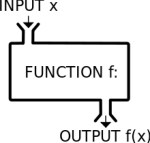
What: “a function that, given the same input, will always return the same output and does not have any observable side effect.”
Why: with pure functions we can easily cache, debug, test and parallelize the processing of them. There is no state to understand / set up.
How: write functions that does not have side effect. Although we’ll eventually write programs that mutate values, we can certainly try to minimize it. (And when we do need to mutate values, we can use functions to help us)
This file contains hidden or bidirectional Unicode text that may be interpreted or compiled differently than what appears below. To review, open the file in an editor that reveals hidden Unicode characters. Learn more about bidirectional Unicode characters
What: “You can call a function with fewer arguments than it expects. It returns a function that takes the remaining arguments.”
Why: you can promote the reusability to function level, you can use them to compose programs that expects another function
How: build a function with n parameters that returns n functions instead of the immediate result.
This file contains hidden or bidirectional Unicode text that may be interpreted or compiled differently than what appears below. To review, open the file in an editor that reveals hidden Unicode characters. Learn more about bidirectional Unicode characters
What: is the act of creating your programs using lots of functions.
Why: this promotes the reuse at a great level and forces you to think about what instead of how.
How: chain functions to produce a new callable function.
This file contains hidden or bidirectional Unicode text that may be interpreted or compiled differently than what appears below. To review, open the file in an editor that reveals hidden Unicode characters. Learn more about bidirectional Unicode characters
This file contains hidden or bidirectional Unicode text that may be interpreted or compiled differently than what appears below. To review, open the file in an editor that reveals hidden Unicode characters. Learn more about bidirectional Unicode characters
This file contains hidden or bidirectional Unicode text that may be interpreted or compiled differently than what appears below. To review, open the file in an editor that reveals hidden Unicode characters. Learn more about bidirectional Unicode characters
I hope you might see the benefits you can have from using one or other technique from functional programming but for sure there are other benefits not shown here, I strongly recommend you to read the INCREDIBLE free book (gitbook)“Professor Frisby’s Mostly Adequate Guide to Functional Programming”, in fact, most of the ideas and examples here are from it.
There are advanced techniques to deal with data mutation with less pain, to handle errors and exceptions without try and catch and more abstractions that can help you and you can read them on the book.
And don’t use the handcrafted curry and compose built here (they’re far from production-ready), instead use a library like Ramda, which provides many basic functions like: map, filter and other all of them already curried, or lodash-fp.
Attention: this post provides a very quick and simplistic (but functional) vision of the promised title.
In the beginning
Linux is a fantastic OS, it has more than we imagine and it still manages to get better. There is a feature called cgroups:
which provides a mechanism for easily managing and monitoring system resources, by partitioning things like cpu time, system memory, disk and network bandwidth, into groups, then assigning tasks to those groups
Let’s say we created a cgroup with: 50% of cpu, 20% memory, 2% of disk and a virtual network with 100% of bandwidth, now we can run our application under that cgroups restrictions.
which combines kernel’s cgroups and support for isolated namespaces to provide an isolated environment for applications
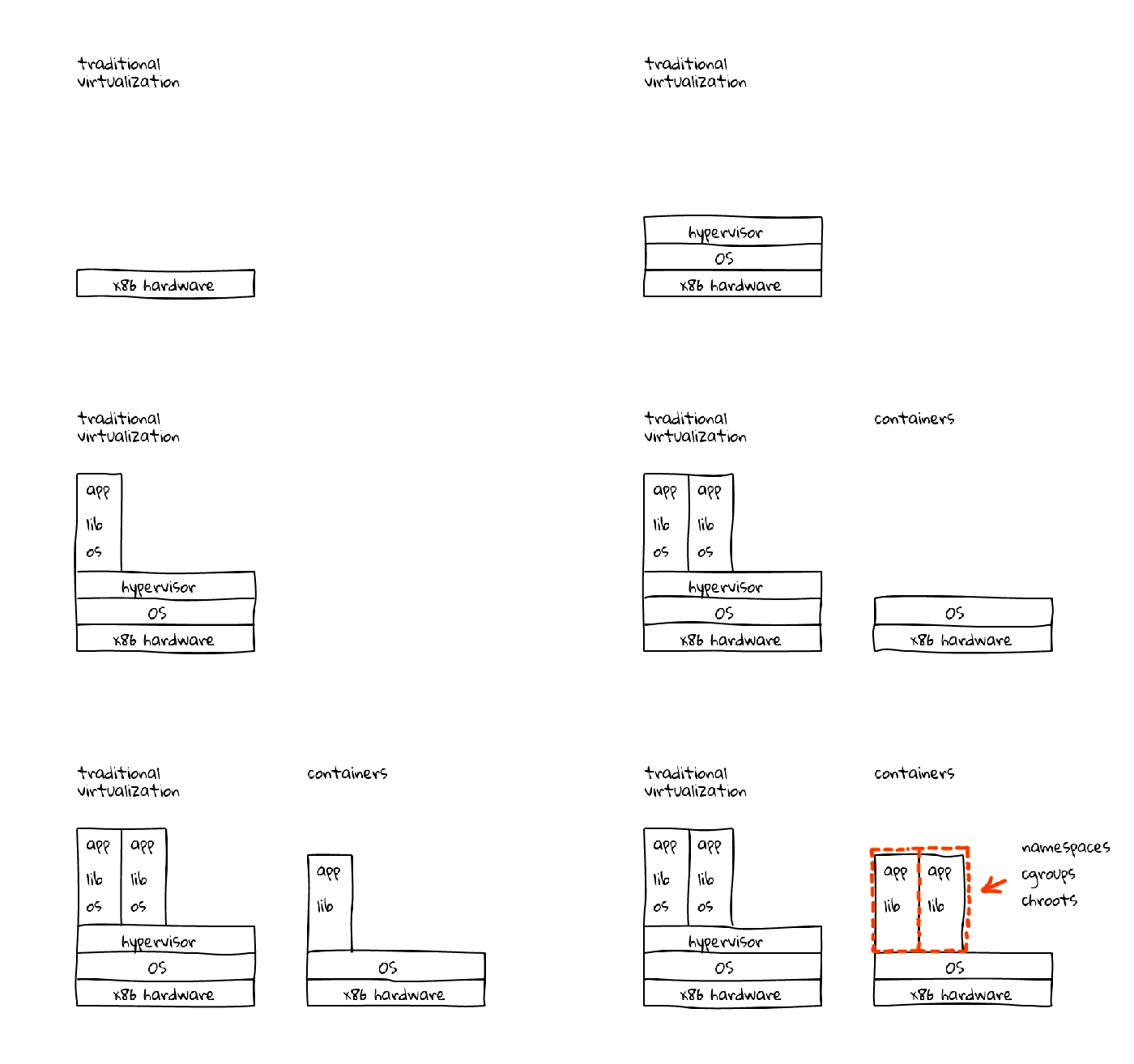
Now we’re able to provide a Linux machine capable of running multiple applications that run in isolation (like if there was an isolated OS for each application). This sounds like something we achieved with virtualization (app-level, os-level, cpu-level and so on) but faster and cheaper and without the overhead of running multiple kernels.
an open-source project that automates the deployment of applications inside software containers, by providing an additional layer of abstraction and automation of operating-system-level virtualization on Linux. This is what Docker is but remember, it is not perfect.
The highlighted part is very interesting, docker will provide you a layer of abstraction that allows you to create and deploy your application within a container (an isolated, resource managed place to run processes) in a standardized way.
Docker machine, compose and so on
Life almost always get easier with abstractions, we (developers) don’t worry about how disks works (drivers) or even how a package left your pc and hit another one (we should know how this works :P). Our productivity had increased a lot since we relied on these abstractions.
And this is the same for the docker ecosystem, as we start to use it more often. We create best practices, solve issues with workarounds and etc, some of these will become part of the docker solution.
docker-machine: An application needs a machine to run regardless if it’s local, physical, virtual or in the cloud.
docker-compose: An application needs a way to declare its dependencies, either packages or distinct services like datastore.
Step 0: get ready
If you’re on MacOS/Windows you’ll need to install VirtualBox or VMWare
This file contains hidden or bidirectional Unicode text that may be interpreted or compiled differently than what appears below. To review, open the file in an editor that reveals hidden Unicode characters. Learn more about bidirectional Unicode characters
We declare our dependencies by using two files: docker-compose.yaml and Dockerfile. In the Dockerfile we’ll describe how our machine should be (aka: all need packages and stuffs).
This file contains hidden or bidirectional Unicode text that may be interpreted or compiled differently than what appears below. To review, open the file in an editor that reveals hidden Unicode characters. Learn more about bidirectional Unicode characters
Then we can move to its broad services dependencies, like database or even web server. We’ll use mongo as datastore and nginx as the web server.
This file contains hidden or bidirectional Unicode text that may be interpreted or compiled differently than what appears below. To review, open the file in an editor that reveals hidden Unicode characters. Learn more about bidirectional Unicode characters
This file contains hidden or bidirectional Unicode text that may be interpreted or compiled differently than what appears below. To review, open the file in an editor that reveals hidden Unicode characters. Learn more about bidirectional Unicode characters
This file contains hidden or bidirectional Unicode text that may be interpreted or compiled differently than what appears below. To review, open the file in an editor that reveals hidden Unicode characters. Learn more about bidirectional Unicode characters
We need to create a machine for it and then we need to run it.
This file contains hidden or bidirectional Unicode text that may be interpreted or compiled differently than what appears below. To review, open the file in an editor that reveals hidden Unicode characters. Learn more about bidirectional Unicode characters
The same way we created a machine to run our app locally ,we can create any number of machines to run this application, even in cloud environment such as digitalocean, aws, azure, google and etc.
This file contains hidden or bidirectional Unicode text that may be interpreted or compiled differently than what appears below. To review, open the file in an editor that reveals hidden Unicode characters. Learn more about bidirectional Unicode characters
Useful commands to troubleshooting, exploration and debug:
To enter on a machine: $ docker-machine ssh staging (either local or cloud)
To enter on a container: $ docker-compose run db bash (either local or cloud)
To list files within a container: $ docker-compose run db ls -lah data/db
To edit/add/remove data on mongo: $ mongo –host DOCKER_IP
If you face any error like E: Failed to fetch … during the docker-compose build try it again
If you face any error like “Error creating machine: Error running provisioning: Unable to verify the Docker daemon is listening: Maximum number of retries (10) exceeded” during any deployment, try to download docker-toolbox again and install it.
I’m sorry for the clickbait headline, I didn’t have a better idea/name for it.
We (developers) occasionally produce lazy/messy code and from time to time we need to remember the most important rule: “We do code to solve problems but also for human being be able: to use, to maintain and to evolute”.
TLDR; (a unit can be a: function, var, method, class, parameter and etc)
Naming your units with care and meaning;
Try to see your code as a series of transformation;
When possible make yours units generic.
Keep in mind that these tips are just my opinions and at the best they were based on: excellent books (Refactoring, DDD, Clean Coder and etc ), articles & blog posts, excellent people I’ve worked/paired with, presentations, tweets and experiences.
naming is hard
Name your units with care and meaning. Your code should be easy to understand.
This file contains hidden or bidirectional Unicode text that may be interpreted or compiled differently than what appears below. To review, open the file in an editor that reveals hidden Unicode characters. Learn more about bidirectional Unicode characters
the function topComments receives an id but is it the id from the comment, user, article? Let’s say it’s form the user, therefore userId should vanish this doubt.
the name of the function is topComments but it looks like it’s getting the top 10 latest comments only thus we could call it top10LatestCommentsFrom.
the ajax function accept two callbacks one in case of success (succCB) and otherwise an error (errCB), I believe we can call them: onSuccess and onError for better understanding.
all the arguments are using short names and we can have less confusing names just by using the entire name.
you got the ideia, naming things to let the code clear!
This file contains hidden or bidirectional Unicode text that may be interpreted or compiled differently than what appears below. To review, open the file in an editor that reveals hidden Unicode characters. Learn more about bidirectional Unicode characters
Although we still have so many problems in this code, now it’s easier to understand and we only named things properly.
For sure there are some cases when short names are just okay, for example: when you’re developing an emulator or virtual machine you often use short names like sp (stack pointer) and pc (program counter) or even doing a very generic unit.
This file contains hidden or bidirectional Unicode text that may be interpreted or compiled differently than what appears below. To review, open the file in an editor that reveals hidden Unicode characters. Learn more about bidirectional Unicode characters
Try to see and fit your code as transformations, one after another.
Some say that in computer science almost all the problems can be reduced to only two major problems: sort and count things (plus doing these in a distributed environment), anyway the point is: we usually are coding to make transformation over data.
For instance our function top10LatestCommentsFrom could be summarized in these steps:
fetch comments (all)
sort them (by date)
filter them (only top)
select the first 10
Which are just transformations over an initial list, we can make our function top10LatestCommentsFrom much better with that mindset.
This file contains hidden or bidirectional Unicode text that may be interpreted or compiled differently than what appears below. To review, open the file in an editor that reveals hidden Unicode characters. Learn more about bidirectional Unicode characters
By the way this could lead you to easily understand the new kid on the block sometimes referred as Functional Reactive Programming.
<be generic>
Work to make your units generic.
Let’s imagine you are in an interview process and your first task is to code a function which prints the numbers 1, 2 and 3 concatenated with “Hello, “. It should print: “Hello, 1” and then “Hello, 2″…
This file contains hidden or bidirectional Unicode text that may be interpreted or compiled differently than what appears below. To review, open the file in an editor that reveals hidden Unicode characters. Learn more about bidirectional Unicode characters
Now they ask you to print also the letters: “D”, “K” and “C”.
This file contains hidden or bidirectional Unicode text that may be interpreted or compiled differently than what appears below. To review, open the file in an editor that reveals hidden Unicode characters. Learn more about bidirectional Unicode characters
It was the first step toward the “generic”, now the interviewers say you have also to print a list of person’s name but now it’ll be a list of objects [{name: “person”},…].
This file contains hidden or bidirectional Unicode text that may be interpreted or compiled differently than what appears below. To review, open the file in an editor that reveals hidden Unicode characters. Learn more about bidirectional Unicode characters
Things start to get specific again and the interviewers want to test you. They ask you to print a list of car’s brand [{brand: “Ferrari”}, ..] plus a list of game consoles with their architecture [{name: “PS4”, arch: “x86-64”}, …]
This file contains hidden or bidirectional Unicode text that may be interpreted or compiled differently than what appears below. To review, open the file in an editor that reveals hidden Unicode characters. Learn more about bidirectional Unicode characters
Yikes, I suppose you’re not proud of that code and probably your interviewers will be little concerned about your skills with development, let’s list some of the problems with this approach.
Naming (we’re calling a person of an item)
High coupling (the function print knows too much about each printable)
Lots of (inner) conditionals 😦 it’s really hard to read/maintain/evolute this code
What we can do?! Well, it seems that all we need to do is to iterate through an array and prints an item but each item will require a different way of printing.
This file contains hidden or bidirectional Unicode text that may be interpreted or compiled differently than what appears below. To review, open the file in an editor that reveals hidden Unicode characters. Learn more about bidirectional Unicode characters
I said naming is important but when you make something very generic you should also make the abstract names not tied to any concrete concept. In fact, in Haskell (let’s pretend I know Haskell) when a concretetype of something may vary we use single lettersto take their place.
This file contains hidden or bidirectional Unicode text that may be interpreted or compiled differently than what appears below. To review, open the file in an editor that reveals hidden Unicode characters. Learn more about bidirectional Unicode characters





 Leandro Moreira
You must be logged in to post a comment.