Here at Globo, we have as our mission to build resilient systems to provide an optimal experience for our domestic and international customers, allowing them to watch their favorite international or local tv show, a soap opera, or any of our live streaming channels on globoplay.
The architecture supporting globoplay’s media platform heavily relies on open-source software such as GNU/Linux, nginx, tsuru, kubernetes, clappr, nginx, on-the-fly packaging and much more. Another exciting aspect about Globo is that we built and manage our own CDN. Such a task pushes us to broaden our knowledge and understanding around Brazil’s networking infrastructure.
Nowadays, people are expecting to stream on any device they own. This means that we need to support most of these devices. There are hundreds of smartphones, dozens of smart TVs, many tablets, browsers, casters, etc. Providing a steady and successful playback experience in this scenario inevitably adds a lot of complexity to the architecture.
landscape
We’re live-streaming the famous program Big Brother through the Internet and broadcasting it into the air as well. In one of the days, we reached 2 million simultaneous users watching the BBB live stream. To serve these many users, we must be present in the majority of stream-capable platforms.
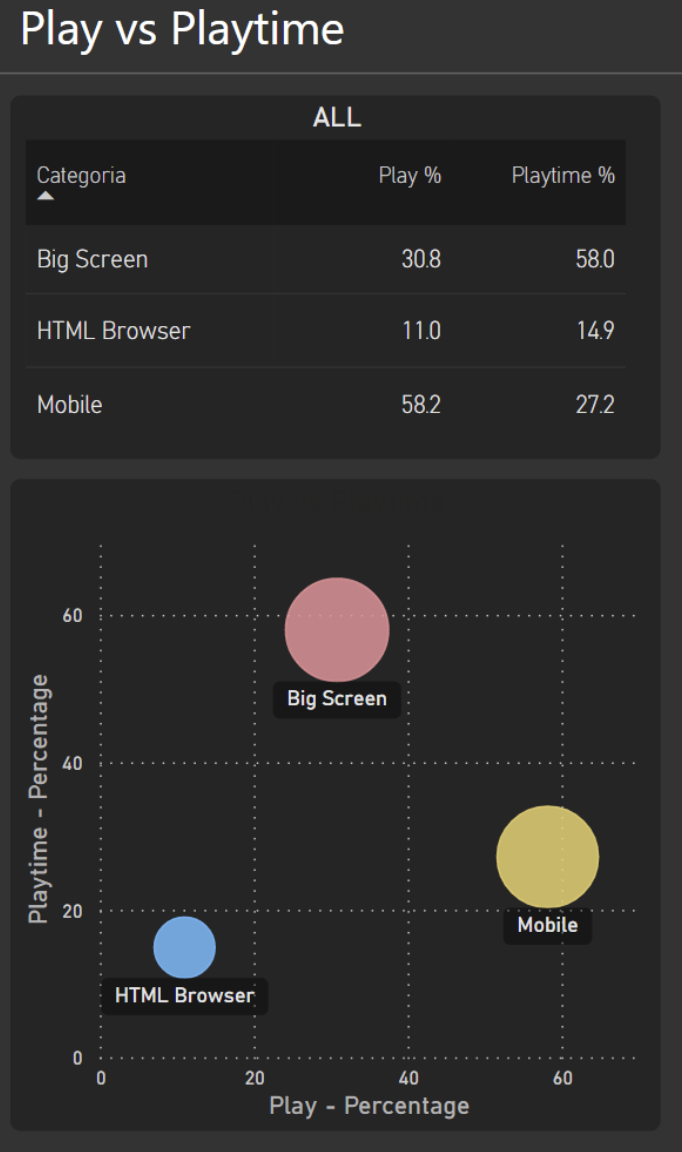
Before we discuss the challenges we face dealing with this plethora of devices, here’s the breakdown of play hit and watch session percentage grouped by major platform.
The data from one week in January, 2021. Play metric means the percentage of plays for a specific device. Playtime represents the fraction (%) of whole-time watched by a given platform. Big screen accommodates all casters and HTML also counts mobile browsers.
In the US, the market-share seems to gravitate around the casters (also k nown as OTT devices like FireTV, Roku, ATV, etc). In contrast, here in Brazil, we have mobile devices and connected TVs sharing a lot of home presence. We have a diverse environment of Connected TVs brands as well as a significant number of old TVs that run legacy and outdated firmware/OS versions.
On the Big Brother case, the big-screen performed fewer plays, but people kept watching on it for longer sessions. It could be due to the convenience that these devices offer, but it’s hard to draw a conclusion.
This data may differ from other players in Brazil. However, here are some observations for the context of Brasil:
Netflix, due to its premium VOD only nature,
Youtube, because they’re present natively on most platforms,
Twitter / Facebook, their massive presence mostly on mobile
Although it wouldn’t be unexpected, if the data presented here align with these players.
challenges
While having people watching everywhere sounds good, it also poses a hard technical challenge. To support the majority of devices, we need to adjust our platform in almost every component of its workflow.
Here we list some of the problems we faced and how we fixed them:
http protocol
HTTP Cookies
problem: some devices can’t manage cookies
solution: persist data over URI or HTTP headers
HTTP CORS
problem: some native players don’t follow all the cors specification
solution: adapt for their usage
chunked transfer
problem: a specific device fails silently dealing with chunked transfer
solution: buffer the intermediate response and serve the full file
media encoding
video frame rate
problem: mixing different frame rates (i.e. 30fps and 60fps) causes glitches on rendition swap in some players
solution: offer fixed frame rate ladder for them
audio sampling
problem: 48khz sampling causing audio glitch/sync on some devices
solution: stick to 44.1 khz
aes hls encryption
problem: some devices handles aes hls keys as if they were always at the same level as the master variant (if they aren’t, then it’s a 404)
solution: put the full URI for each key or always have your variant in the same level as your master
syncing by hls media sequence
problem: some players use the hls media sequence attribute to sync among the renditions
solution: always sync your media sequence
high resolutions
problem: some devices won’t be able to play high resolution renditions (even if they advise otherwise)
solution: filtering out resolutions based on observed capacity
network
Brazil is a continental country with sub-optimal internet infrastructure. One way to offer a smooth experience for media streaming users is to take the content closer to them. We are continually expanding our footprint with new edges, open caches, ISP, IX, etc.
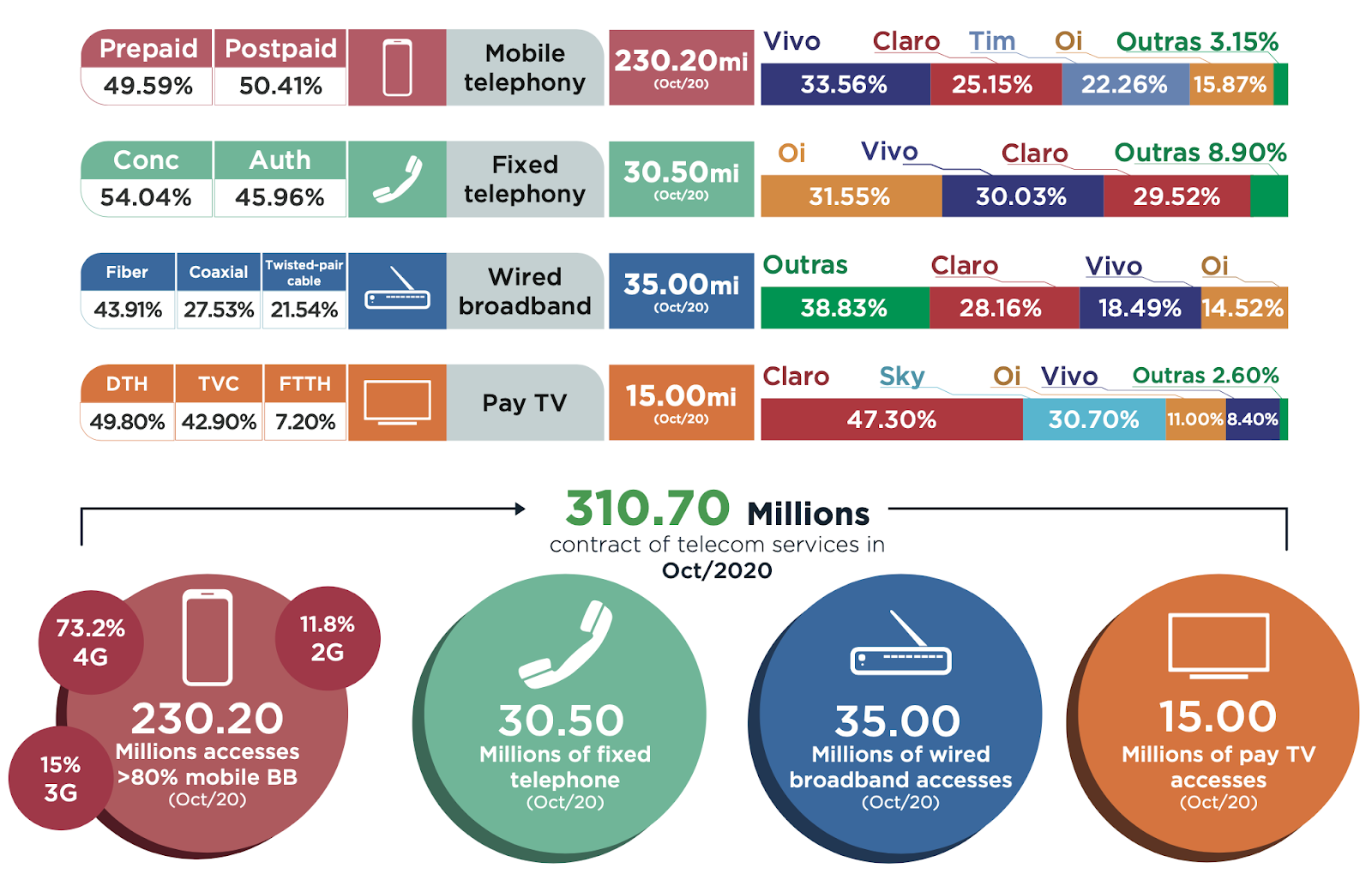
Although we have an average broadband of 24 Mb/s, we still have a lot of users down below the 2 Mb/s marks. It might be due to the ISP fragmentation (Brasil has at least six thousand of them).
We improved our streaming QoE by adding a 144p rendition within our current ladders. In a live streaming, such a rendition may require around 200kpbs which consumes circa 77MB per hour.
Such a complex scenario made us introduce an extra congestion control level. When we notice that a group of users, behind an ISP, started to fill their link to our CDN, we eagerly adjust the renditions’ suggestion to these users. At the point where the link starts to decrease its saturation, we also re-adjust the suggested bitrates.
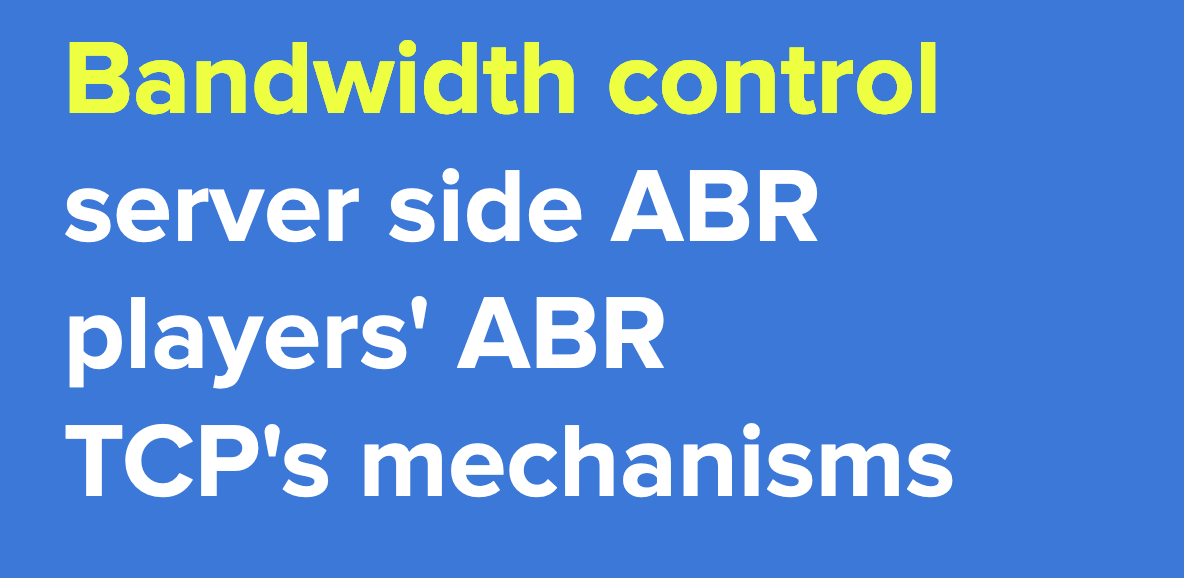
In this server-side “ABR” we act much more preventable than in the player’s ABR algorithms or the (almost reactive) TCP mechanism.
it’s all entertainment
Dealing with outdated devices, varying Internet speed, latency, and bandwidth, plus the already complex media streaming surroundings requires teams to be well-integrated. People working together help to alleviate the hard task of debugging in this environment.
Brazilians love to spend time on the Internet. The quantity of devices (brands, OSes, build year, etc) and the complex Internet infrastructure creates opportunities to be creative while designing systems to support Brasil’s context.
This is the last post in the series, now we’re going to design an edge computing platform using Lua, Nginx, and Redis cluster. Previously, we explained how to add code, not dynamically, in nginx.
Platformize the computations
The platform is meant to provide a way to attach Lua code dynamically into the edge servers. The starting point can be to take the authentication code and port it to this solution.
At the bare minimum, we need a Lua phase name, an identifier and the Lua code. Let’s call this abstraction the computing unit (CU).
If we plan to add a computing unit dynamically to the NOTT, we need to persist it somewhere. A fast data store for this could be Redis.
We also need to find a way to encode the computing unit into some of the Redis data types. What we can do is to use the string to store the computing unit. The key will be the identity and the value will hold the Lua phase and code separated by the string “||“.
This file contains hidden or bidirectional Unicode text that may be interpreted or compiled differently than what appears below. To review, open the file in an editor that reveals hidden Unicode characters.
Learn more about bidirectional Unicode characters
The platform needs to know all of the computing units, therefore, we need to list them. We could use the keys command but it can be very slow depending on how much data we have.
A somewhat better solution would be to store all the identities in a set data type, providing an O(N) solution, where N is the number of CUs.
KEYS pattern would also be O(N) however with N being the total number of keys in the data store.
This file contains hidden or bidirectional Unicode text that may be interpreted or compiled differently than what appears below. To review, open the file in an editor that reveals hidden Unicode characters.
Learn more about bidirectional Unicode characters
Now that we know how we’re going to encode the computing unit, we need to find a method to parse this string separated by || and also a process to evaluate this string as code in Lua.
To find a proper and safe delimiter is difficult, so we need to make sure that no Lua code or string will ever contain ||.
This file contains hidden or bidirectional Unicode text that may be interpreted or compiled differently than what appears below. To review, open the file in an editor that reveals hidden Unicode characters.
Learn more about bidirectional Unicode characters
To split a string we’ll use a function taken from Stackoverflow and for the code evaluation, Lua offers the loadstring function.
But now some new questions arise, what happens if the code is syntactically invalid or when the CU raises an error? and how can we deal with these issues?
This file contains hidden or bidirectional Unicode text that may be interpreted or compiled differently than what appears below. To review, open the file in an editor that reveals hidden Unicode characters.
Learn more about bidirectional Unicode characters
To deal with syntax errors, we need to validate the returned values from the function loadstring where the first value is the function instance and the last is the error.
And to protect against runtime error, Lua has a builtin function called xpcall (pcall meaning protected call) that receives a function to execute and a second argument which is an error handler function.
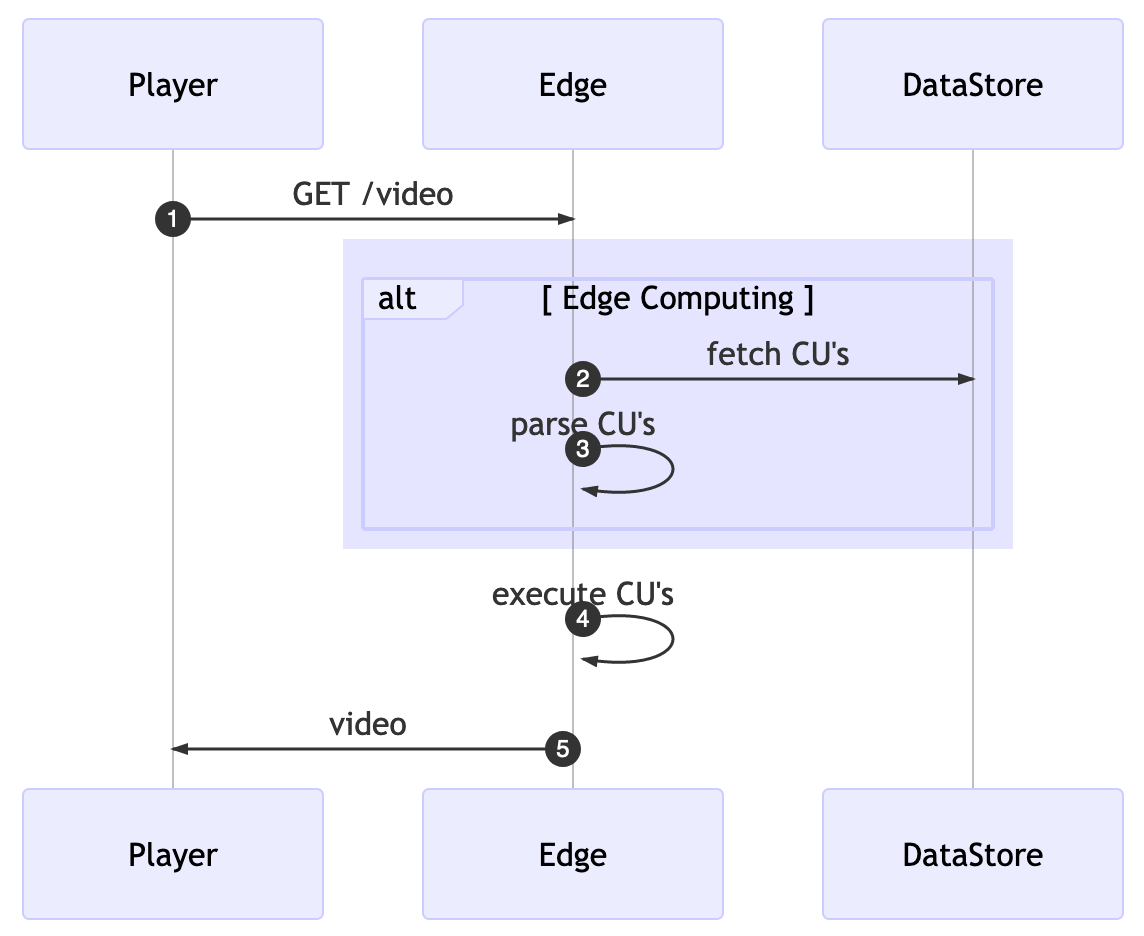
With all this in mind, we can develop the core of our platform. Somehow we need to get all the computing units from Redis, parse them to something easier to consume and finally, we can execute the given function.
Before we start to code, we can create a prototype that will replicate the authorization token system we did before but now using Redis to add and fetch the computing unit as well as shielding the platform from broken code.
This file contains hidden or bidirectional Unicode text that may be interpreted or compiled differently than what appears below. To review, open the file in an editor that reveals hidden Unicode characters.
Learn more about bidirectional Unicode characters
To test these lines of code, we can go to the terminal and simulate calls to the proper nginx location. Therefore we can understand if the expected behavior is shown.
Since we’re comfortable with our experiment, we can start to brainstorm thoughts about the code design and performance trade-offs.
Querying Computer Units
The first decision we can take is about when we’re going to fetch all the computing units (CUs). For the sake of simplicity, we can gather all the CUs for every request but then we’re going to pay extra latency for every client’s request.
We’ll move the fetch and parse logic to run in the background. With that running periodically, we then store the CUs into a shared memory where the edge computing core can lookup without the need for additional network connections.
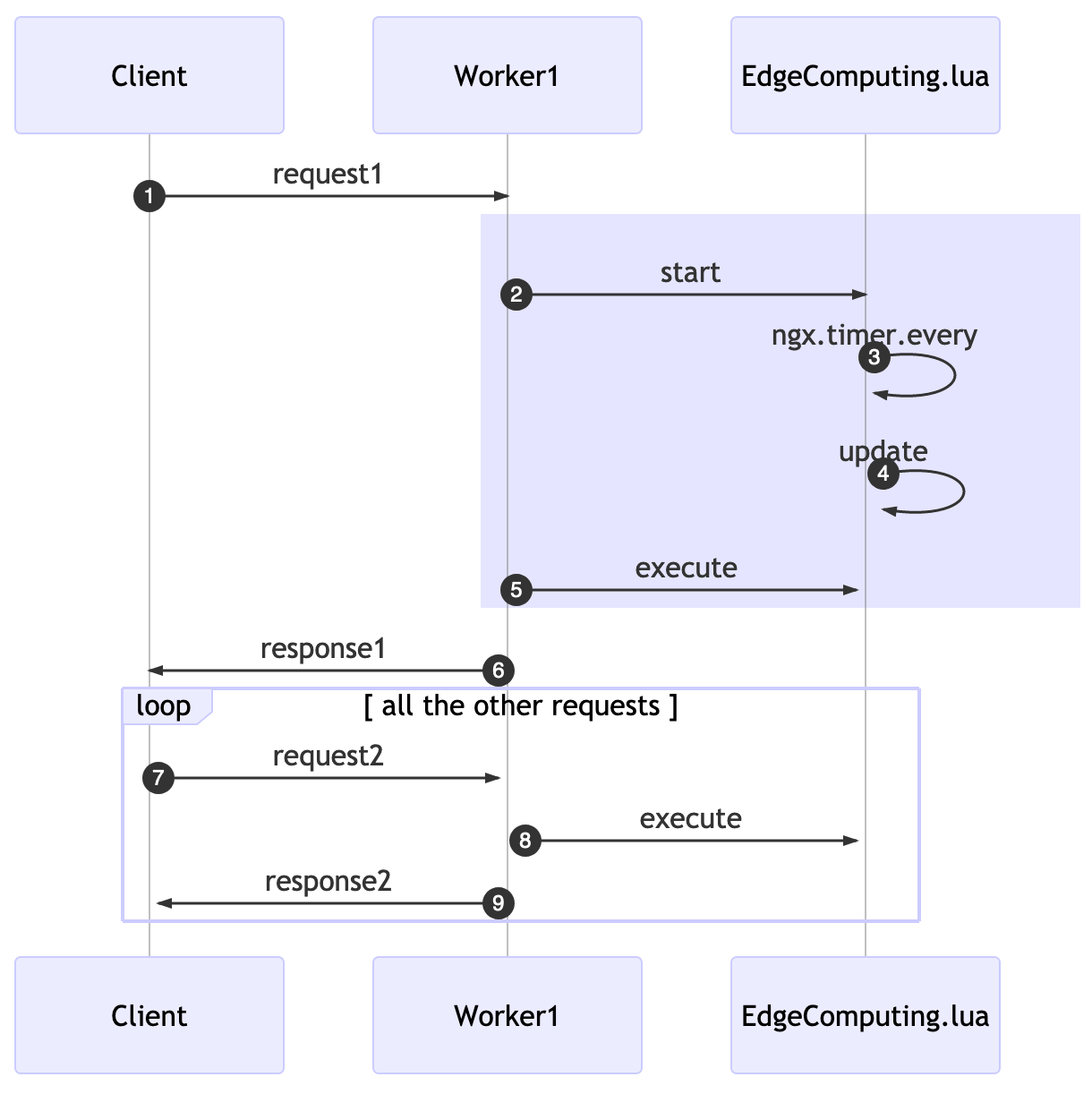
Openresty has a function called ngx.timer.every(delay, callback), it runs a callback function every delay seconds in a “light thread” completely detached from the original request. This background job will do the fetch/parser instead of doing so for every request.
Once we got the CUs, we need to find a buffer that our fetcher background function will store them for later execution, openresty offers at least two ways to share data:
a declared shared memory (lua_shared_dict) with all the Nginx workers
encapsulate the shared data into a Lua module and use the require function to import the module
The nature of the first option requires software locking. To make it scalable, we need to try to avoid this lock contention.
The Lua module sharing model also requires some care:
“to share changeable data among all the concurrent requests of each Nginx worker, there is must be no nonblocking I/O operations (including ngx.sleep) in the middle of the calculations. As long as you do not give the control back to the Nginx event loop and ngx_lua’s light thread scheduler (even implicitly), there can never be any race conditions in between. “
The usage of this edge computing lua library requires you to start the background process and also to explicitly call an execution function for each location and lua phase you want to add it to.
This file contains hidden or bidirectional Unicode text that may be interpreted or compiled differently than what appears below. To review, open the file in an editor that reveals hidden Unicode characters.
Learn more about bidirectional Unicode characters
In the past example, we started, on the first request, at the rewrite phase, this will also initiate the background job to update every X seconds.
On the access phase, we’re going to execute the available CUs. If a second request comes in, it’ll “skip” the start and just execute all the cached CUs.
While using these APIs solve our challenge of adding unnecessary latency, it comes at a price: now when we add a new CU to the data store, it might take X seconds to be available for workers.
The rewrite_by_lua_block was used because it’s the first phase where we can start a background job that can access cosockets and works with lua-resty-lock (a library used by resty-redis-cluster).
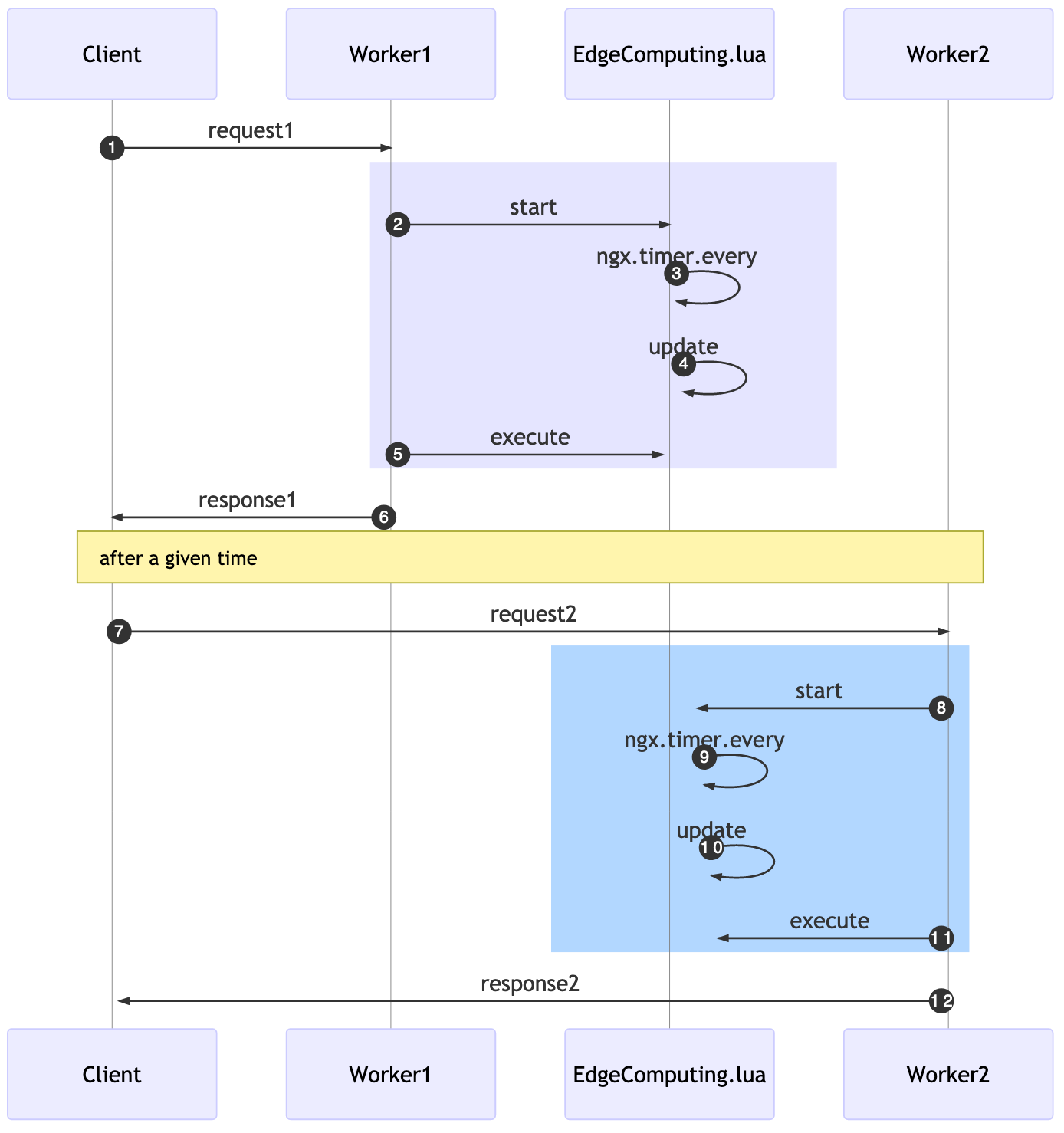
A funny behavior will happen, related to the eventual consistency nature of this solution: if a client issues a request1, in a given time for a Worker1, later the same user does another request2 and a different Worker2 will accept it. The time in which each worker will run the update function will be different.
This means that the effective deployment of your CUs will be different even within a single server. The practical consequence for this is that the server might answer something different for a worker in comparison to another one. It will eventually be consistent given the x seconds delay declared as update interval.
Adding the CU via the Redis cluster will make it work.
This file contains hidden or bidirectional Unicode text that may be interpreted or compiled differently than what appears below. To review, open the file in an editor that reveals hidden Unicode characters.
Learn more about bidirectional Unicode characters
Let’s list some of the possible usages for this platform so we can think a little bit ahead of time.
access control – tokens, access control, origin
change response
decorate headers
generate content
traffic redirect
advanced caching
…
The options are endless, but let’s try to summarize the features that we didn’t add to the code yet.
When we implemented the request counter we used redis as our data store so it’s safe to assume that somehow the CUs might use redis to persist data. Another thing we could do is to offer sampling, instead of executing the task for all requests we could run it for 3% of the them.
Another feature we could do is to allow filtering by the host. In this case, we want a given CU to execute in a specific set of machines only, but we also can achieve that in the CU itself if we need to.
The persistence needs to be passed for the CU, we can achieve that by wrapping the provided raw string code with a function that receives an input and pass this argument through the pcall call.
This file contains hidden or bidirectional Unicode text that may be interpreted or compiled differently than what appears below. To review, open the file in an editor that reveals hidden Unicode characters.
Learn more about bidirectional Unicode characters
We’ll have access to the edge_computing in our CUs as if it was a global variable.
And finally, we can mimic the sampling technique by using a random function. Let’s say we want a given CU to be executed 50% of the time.
We need to encode the desired state at the datastore level and before we run the CU, we check if the random number, ranging from 1 to 100, is smaller or equal to the desired sampling rate.
This file contains hidden or bidirectional Unicode text that may be interpreted or compiled differently than what appears below. To review, open the file in an editor that reveals hidden Unicode characters.
Learn more about bidirectional Unicode characters
Pure random distribution is not the most adequate, maybe in the future, we can use an algorithm similar to the power of two choices.
Future
Any platform is a complex piece of software that needs to be flexible, accommodate many kinds of usage, be easy to use, be safe and it still needs to be open for future innovation/changes such as:
a control plane where you can create CUs using UI
if the execution order is important then change the current data types
add usage metrics per CU
wrapper the execution with a timeout/circuit breaker mechanism
I hope you enjoyed these blog posts, they were meant to mostly show some trade-offs and also to deepen the nginx and Lua knowledge.
This is the second post in the series where we develop an edge computing platform. In this post, we’ll add some code/behavior to the front end servers. Here’s a link to the previous entry.
Add code inside the front end
The OTT service we did before don’t employ any kind of authentication thus the users can watch the streams for free. To solve this authentication issue we can add Lua code embed into nginx.
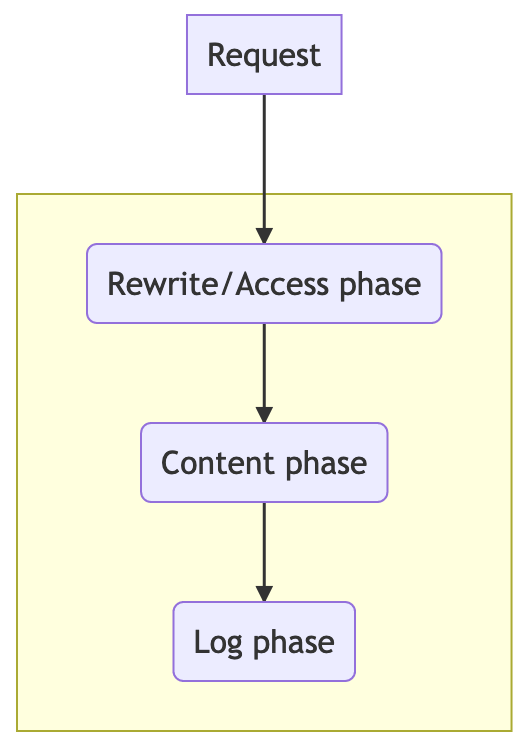
To run Lua code inside nginx you need to understand a little bit of the request phases within the server. The request will travel across different stages where you can intercept it using Nginx directives and add the code.
Just for the sake of learning, the authentication logic will be a straightforward token system. During the access phase, we’ll deny access for those with no proper authentication. Once a user has the required token it’s going to be persisted in form of a cookie.
Fixed token with no expiration is unsafe for production usage, you should look for something like JWT.
This file contains hidden or bidirectional Unicode text that may be interpreted or compiled differently than what appears below. To review, open the file in an editor that reveals hidden Unicode characters.
Learn more about bidirectional Unicode characters
The edge server can run useful behavior/code, now let’s laid out some examples that demonstrate the power we can have while executing functions at the front end.
Suppose a hacker, behing the IP 192.168.0.253, is exploting a known issue, that is going to be fixed soon. We can solve that by forbiddening his/her IP. Adding lua code, to the same phase, can fix this problem.
This file contains hidden or bidirectional Unicode text that may be interpreted or compiled differently than what appears below. To review, open the file in an editor that reveals hidden Unicode characters.
Learn more about bidirectional Unicode characters
Nginx has the deny directive to solve this problem although it doesn’t allow a dynamic way to update the IP list. We would need to reload the server every time we want to update the IPs.
It’s wanted to avoid different domains to consume our streams, to prevent that, we’re going to examine the referer header and reject all the requests not originated from our domain.
This file contains hidden or bidirectional Unicode text that may be interpreted or compiled differently than what appears below. To review, open the file in an editor that reveals hidden Unicode characters.
Learn more about bidirectional Unicode characters
To on-the-fly change the response from the backend, we’ll add a custom HLS tag in the playlist.
This file contains hidden or bidirectional Unicode text that may be interpreted or compiled differently than what appears below. To review, open the file in an editor that reveals hidden Unicode characters.
Learn more about bidirectional Unicode characters
To decorate the HTTP headers, we’ll attach new ones exposing some metrics from the server and for that matter, it can rely on the ngx.header[‘name’] API.
This file contains hidden or bidirectional Unicode text that may be interpreted or compiled differently than what appears below. To review, open the file in an editor that reveals hidden Unicode characters.
Learn more about bidirectional Unicode characters
Finally, we’ll count how many requests a given user (based on her/his IP) does and expose it through a custom HTTP header. The counter was stored in Redis.
This file contains hidden or bidirectional Unicode text that may be interpreted or compiled differently than what appears below. To review, open the file in an editor that reveals hidden Unicode characters.
Learn more about bidirectional Unicode characters
All this is working, if you want, you can test it by yourself.
This file contains hidden or bidirectional Unicode text that may be interpreted or compiled differently than what appears below. To review, open the file in an editor that reveals hidden Unicode characters.
Learn more about bidirectional Unicode characters
Create software from “scratch” might not be a good idea at first but it’s often a great way to study a specific technology or even to deepen your knowledge in a particular field of computer science.
In this three-post series, we’re going to build a simple video platform using open-source software, will add features to it so it handles the computional power on the front end (edge computing) and we’ll conclude designing a platform that will enable us to add code/features dynamically to the servers.
An over-the-top (OTT) is a streaming media service offered directly to viewers via the Internet. OTT bypasses cable, broadcast, and satellite television platforms. Nowyoudon’t needto spendyour money that much.
Edge computing is the ability to put computation and storage closer to the place where it is demanded, in simpler terms is the code running within your front end servers.
We’re going to design two distinct services: a simple video streaming solution and an edge computing platform for this video streaming service.
The new OTT is a VERY SIMPLE open-source video platform that expects an input signal and produces an output stream. It was made mostly as an excuse to discuss and design an edge computing platform around it.
NOTT is built using a simple html5 app
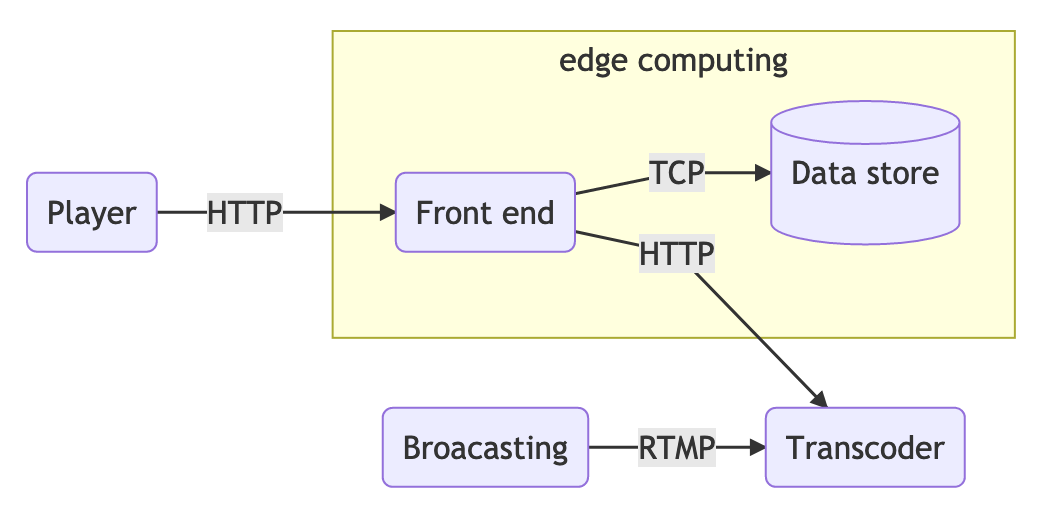
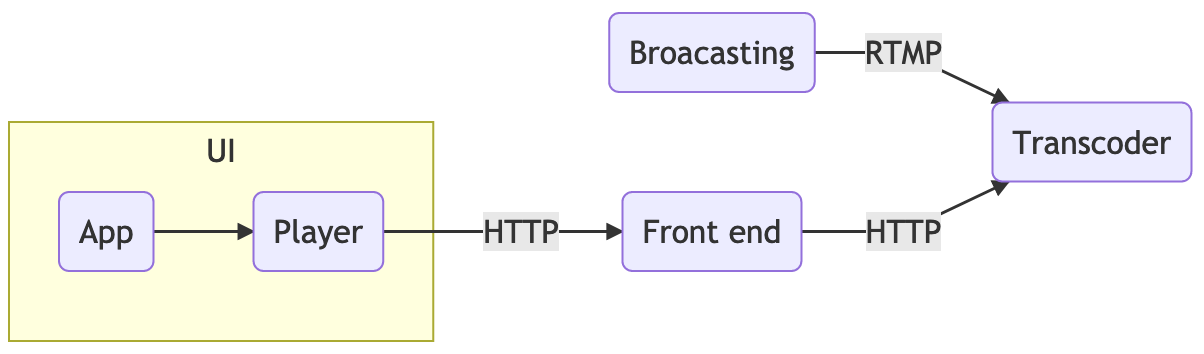
NOTT architecture
The UI app is a simple static html5 file served from nginx. We’re using Clappr (backed by hls.js and shaka) as the selected player. The front end works as a caching layer for the video streaming and it also hosts the NOTT app.
The live streaming reaches the platform through FFmpeg, the broacasting, which is also used to transcode the input producing multiple renditions. The nginx-rtmp acts as a packager, converting the RTMP input into the adaptive output streaming format known as HLS.
The main selling point of our OTT platform is that it has the popular TV channel color bar (60fps) and the legendary TV show big buck bunny (partner’s licensed content).
Compatibility: I didn’t test on all platforms (browsers, ios, android, CTVs), video is hard and NOTT won’t cover 100% of the devices but it should work in most places.
How does it work?
To broadcast the color bar TV show into the platform, we’ll use FFmpeg. It has some filters that are capable to create synthetic color bar frames at a given rate. It also offers an audio source filter known as sine can be used to create artificial sound.
This command creates color bar pictures at 60 frames per second and a sine wave sound at 48000 hertz. It encodes them to the video codec h264 using the libx264 and to the audio codec aac. Finally, we send them to the transcoder/packager using RTMP.
This file contains hidden or bidirectional Unicode text that may be interpreted or compiled differently than what appears below. To review, open the file in an editor that reveals hidden Unicode characters.
Learn more about bidirectional Unicode characters
The ingest server runs nginx-rtmp and it acts as input service, receiving the FFmpeg synthetic stream. It also transcodes (spawning FFmpeg processes for that) and creates the HLS format in a given folder.
The front end servers will consume the streaming via HTTP backed by this ingest server.
This file contains hidden or bidirectional Unicode text that may be interpreted or compiled differently than what appears below. To review, open the file in an editor that reveals hidden Unicode characters.
Learn more about bidirectional Unicode characters
The front end server we chose was nginx, a scalable web server and reverse proxy. This will be the endpoint where the final users can access the html5 application to watch the stream. It will also work as a caching layer for scalability.
This file contains hidden or bidirectional Unicode text that may be interpreted or compiled differently than what appears below. To review, open the file in an editor that reveals hidden Unicode characters.
Learn more about bidirectional Unicode characters
Finally, the app is a simple HTML static file that instantiates the player.
This file contains hidden or bidirectional Unicode text that may be interpreted or compiled differently than what appears below. To review, open the file in an editor that reveals hidden Unicode characters.
Learn more about bidirectional Unicode characters
The entire platform was conceived with Linux containers in mind so you just need to run make run and this is going to start it all. You also need to start the color bar in a different tab by running make broadcast_tvshow and point your browser to http://localhost:8080/app.
This file contains hidden or bidirectional Unicode text that may be interpreted or compiled differently than what appears below. To review, open the file in an editor that reveals hidden Unicode characters.
Learn more about bidirectional Unicode characters
The genuine reason we created this simplistic video platform is to have a software where we can explore the computation at the edge. The next post will be empowering the Nginx front end with Lua code to add features to NOTT, things like authentication and IP acl.
At the last Globo.com’s hackathon, Lucas Costa and I built a simple Lua library to provide a distributed rate measurement system that depends on Redis and run embedded in Nginx but before we explain what we did let’s start by understanding the problem that a throttling system tries to solve and some possible solutions.
Suppose we just built an API but some users are doing too many requests abusing their request quota, how can we deal with them? Nginx has a rate limiting feature that is easy to use:
This file contains hidden or bidirectional Unicode text that may be interpreted or compiled differently than what appears below. To review, open the file in an editor that reveals hidden Unicode characters. Learn more about bidirectional Unicode characters
This nginx configuration creates a zone called mylimit that limits a user, based on its IP, to be able to only do a single request per minute. To test this, save this config file as nginx.conf and run the command:
This file contains hidden or bidirectional Unicode text that may be interpreted or compiled differently than what appears below. To review, open the file in an editor that reveals hidden Unicode characters. Learn more about bidirectional Unicode characters
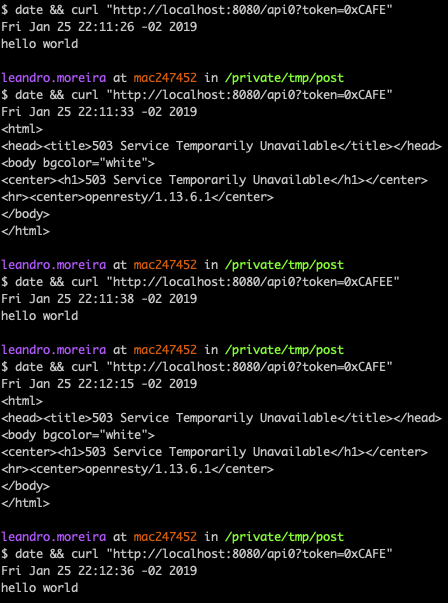
As you can see, our first request was just fine, right at the start of the minute 50, but then our next two requests failed because we were restricted by the nginx limit_req directive that we setup to accept only 1 request per minute. In the next minute we received a successful response.
This approach has a problem though, for instance, a user could use multiple cloud VM’s and then bypass the limit by IP. Let’s instead use the user token argument:
This file contains hidden or bidirectional Unicode text that may be interpreted or compiled differently than what appears below. To review, open the file in an editor that reveals hidden Unicode characters. Learn more about bidirectional Unicode characters
There is another good reason to avoid this limit by IP approach, many of your users can be behind a single IP and by rate limiting them based on their IP, you might be blocking some legit uses.
Now a user can’t bypass by using multiple IPs, its token is used as a key to the limit rate counter.
You can even notice that once a new user requests the same API, the user with token=0xCAFEE, the server replies with success.
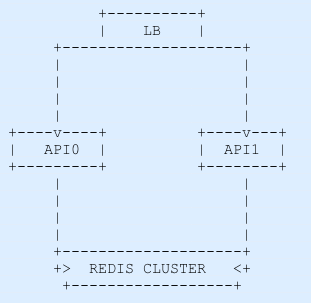
Since our API is so useful, more and more users are becoming paid members and now we need to scale it out. What we can do is to put a load balancer in front of two instances of our API. To act as LB we can still use nginx, here’s a simple (workable) version of the required config.
This file contains hidden or bidirectional Unicode text that may be interpreted or compiled differently than what appears below. To review, open the file in an editor that reveals hidden Unicode characters. Learn more about bidirectional Unicode characters
Now to simulate our scenario we need to use multiple containers, let’s use docker-compose to this task, the config file just declare three services, two acting as our API and the LB.
This file contains hidden or bidirectional Unicode text that may be interpreted or compiled differently than what appears below. To review, open the file in an editor that reveals hidden Unicode characters. Learn more about bidirectional Unicode characters
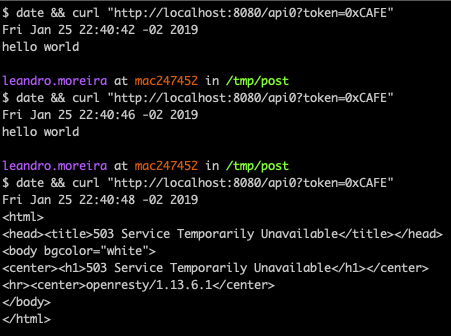
It’s weird?! Now our limit system is not working, or at least not properly. The first request was a 200, as expected, but the next one was also a 200.
It turns out that the LB needs a way to forward the requests to one of the two APIs instances, the default algorithm that our LB is using is the round-robin which distributes the requests each time for a server going in the list of servers as a clock.
The Nginx limit_req stores its counters on the node’s memory, that’s why our first two requests were successful.
And if we save our counters on a data store? We could use redis, it’s in memory and is pretty fast.
To implement the sliding window algorithm it’s actually very easy, you will keep two counters, one for the last-minute and one for the current minute and then you can calculate the current rate by factoring the two minutes counters as if they were in a perfectly constant rate.
To make things easier, let’s debug an example of this algorithm in action. Let’s say our throttling system allows 10 requests per minute and that our past minute counter for a token is 6 and the current minute counter is 1 and we are at the second 10.
last_counter * ((60– current_second) /60) + current_counter
6 * ((60– 10) /60) + 1 = 6 # the current rate is 6 which is under 10 req/m
This file contains hidden or bidirectional Unicode text that may be interpreted or compiled differently than what appears below. To review, open the file in an editor that reveals hidden Unicode characters. Learn more about bidirectional Unicode characters
INCR to count the current counter and retrieve its current value.
EXPIRE to set an expiration for the current counter, since it won’t be useful after two minutes.
We decided to not use MULTI operation therefore in theory some really small percentage of the users can be wrongly allowed, one of the reasons to dismiss the MULTI operation was because we use a lua driver redis cluster without support but we use pipeline and hash tags to save 2 extra round trips.
Now it’s the time to integrate the lua rate sliding window algorithm into nginx.
This file contains hidden or bidirectional Unicode text that may be interpreted or compiled differently than what appears below. To review, open the file in an editor that reveals hidden Unicode characters. Learn more about bidirectional Unicode characters
You probably want to use the access_by_lua phase instead of the content_by_lua from the nginx cycle.
The nginx configuration is uncomplicated to understand, it uses the argument token as the key and if the rate is above 10 req/m we just reply with 403. Simple solutions are usually elegant and can be scalable and good enough.

 and for the code evaluation, Lua offers the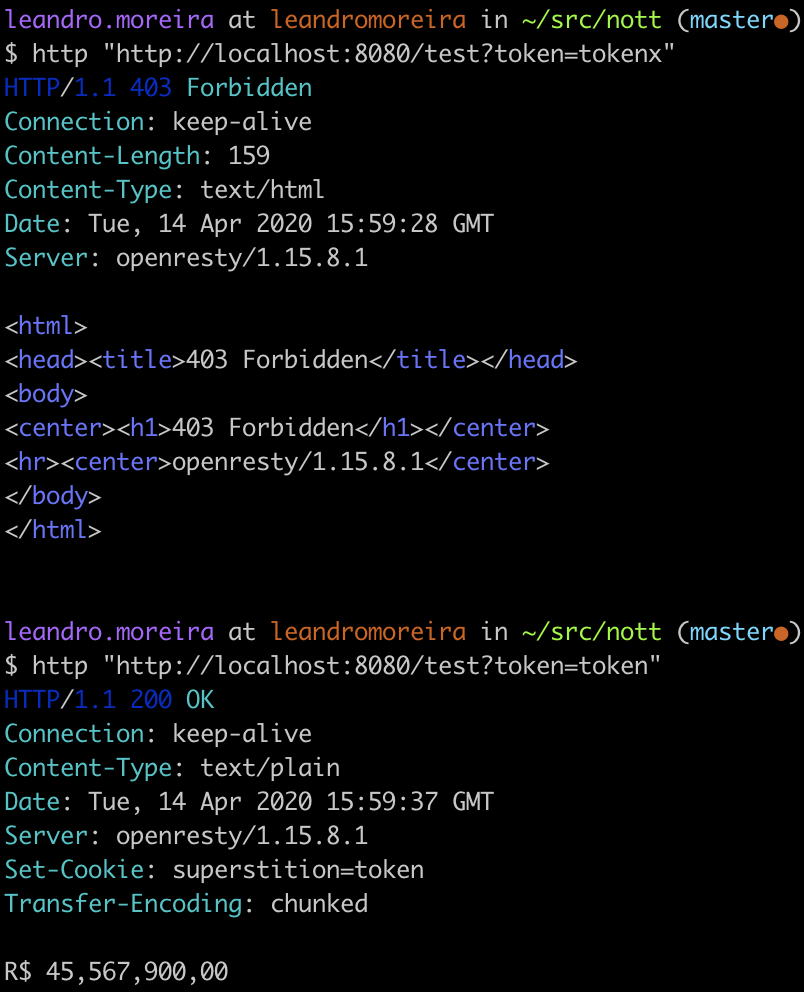




 Leandro Moreira

You must be logged in to post a comment.